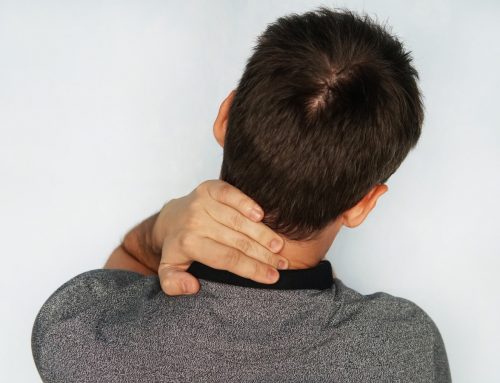

You twist in your chair, hear a satisfying pop, and feel a little looser. Then you see another viral chiropractic video and wonder: is it bad to crack your own back or neck?
We hear this question often at At Last Chiropractic in FishHawk, Lithia, FL. The short answer: an occasional pop is usually nothing to worry about. A habit of cracking all day may be worth a closer look. Here’s what the research says.
What Is That “Pop,” Exactly?
Joints like your knuckles contain a lubricating liquid called synovial fluid. When the joint surfaces are pulled apart quickly, pressure in that fluid drops and dissolved gas comes out of solution, forming a gas-filled cavity [1].
In 2015, researchers used real-time MRI to watch this happen in the finger joints of a volunteer. They found the cracking sound was linked to the cavity forming, not to a bubble bursting [1]. Their paper also describes earlier research finding that once a joint cracks, it can’t crack again for about 20 minutes [1]. That’s why the same knuckle usually won’t pop twice in a row.
Not every noise is the same, though. Cleveland Clinic notes that some sounds may be ligaments or tendons rolling over each other [2].
Is It Bad to Crack Your Own Back Once in a While?
For most people, an occasional crack isn’t a cause for alarm. Writing about neck cracking, Cleveland Clinic puts it this way: “a little bit of snap-crackle-popping is usually nothing to worry about” [2].
What about the old warning that cracking causes arthritis? The knuckle research is reassuring on that point:
- One doctor’s experiment: Dr. Donald Unger cracked the knuckles of his left hand, but not his right, for more than 60 years. He reported no apparent link to arthritis in his fingers [3].
- A 1990 study of 300 adults aged 45 and older: Habitual knuckle crackers did not have more hand arthritis. However, they were more likely to have hand swelling and lower grip strength [4].
So “it won’t give you arthritis” isn’t quite the same as “it has no effects at all.” Most of this research looked at knuckles, not the spine. (We cover the arthritis myth more in 3 Chiropractic Myths Debunked.)
When Frequent Self-Cracking May Be a Sign of Something
The pop itself usually isn’t the main concern. The urge behind it might be. If you feel the need to crack your back or neck many times a day, it may point to stiffness or to how you sit and move.
Cleveland Clinic advises that if you feel you need to crack “all the time,” or if cracking causes pain, it’s worth talking with a health care provider [2].
It also lists a few reasons to be careful with forceful, repeated self-cracking of the neck [2]:
- Looser joints: Constant cracking may stretch and loosen the ligaments around a joint, called ligament laxity.
- Muscle or nerve problems: Cracking too hard or the wrong way can pull a muscle or pinch a nerve.
- Rare artery injury: In very rare cases, a sudden neck movement can injure an artery in the neck (vertebral artery dissection), which can reduce blood flow to the brain.
Know the signs of a medical emergency. Separately from any of the above, sudden neurological symptoms always need emergency care, no matter what you were doing when they started. The CDC lists these as warning signs of stroke and says to call 9-1-1 right away if you or someone else has any of them [6]:
- Sudden numbness or weakness in the face, arm, or leg, especially on one side of the body
- Sudden confusion, trouble speaking, or difficulty understanding speech
- Sudden trouble seeing
- Sudden trouble walking, dizziness, loss of balance, or lack of coordination
- Sudden severe headache with no known cause
Why an Evaluation Is Different From a DIY Crack
When you crack your own back, you’re usually twisting until something moves. You don’t know which joint moved, or why the area felt stiff in the first place.
A chiropractic adjustment starts with a question instead: what is going on, and is an adjustment even appropriate for you?
At our office, the evaluation comes first, and the technique follows the evaluation. We take a health history, do a hands-on exam, and order X-rays only when clinically indicated. A short video can’t show the evaluation behind each visit, and what’s right for one person may not be right for another. We look at each case individually.
What Research Says About Chiropractic Adjustments
The National Center for Complementary and Integrative Health (NCCIH), part of the NIH, summarizes the evidence for low back pain [5]:
- Acute (short-term) low back pain: Moderate-quality evidence linked spinal adjustments to a modest improvement in pain.
- Chronic low back pain: Short-term pain relief was similar to that from other recommended therapies.
- Side effects: Temporary, mild-to-moderate side effects, such as increased discomfort, stiffness, or headache, often occur. Most go away within 24 hours. Serious side effects are very rare.
Results vary from person to person. Chiropractic isn’t right for every condition, and it doesn’t replace medical care when that’s what you need. For a closer look at safety, see Is Chiropractic Care Safe?
Our Gentle Approach in FishHawk
If the idea of a loud “crack” makes you nervous, you’re not alone. Adjustments don’t have to be forceful. At At Last Chiropractic, we use gentle, low-force, instrument-assisted adjustments based on your exam findings.
- Dr. Anthony Taylor, DC focuses on Torque Release Technique and Orthospinology upper cervical care.
- Dr. Carissa Taylor, DC, CACCP is Webster certified and focuses on pregnancy and pediatric care.
- Dr. Paul Polarczyk, DC uses Torque Release Technique and upper cervical care.
We’re proud to hold a 5.0 Google rating with 400+ reviews.
If your neck stiffness comes with frequent headaches, you may also like our post on whether chiropractic care can help with headaches.
Next Steps: Get Evaluated
If you find yourself reaching to crack your own back or neck again and again, it may be time to find out why.
Our new patient offer is $89 and includes a consultation, an exam, and a separate Report of Findings visit. At that visit, we walk you through what we found and your options.
Claim the $89 new patient offer or call us at 813-461-6500. We’re located at 5611 Skytop Drive in FishHawk, Lithia, FL 33547.
The $89 offer is not available to Medicare patients. If you were injured in a car accident, please visit our car accident chiropractor page instead.
This article is for general education and isn’t a substitute for an individual evaluation by a health care provider.
References
- Kawchuk GN, Fryer J, Jaremko JL, Zeng H, Rowe L, Thompson R. Real-Time Visualization of Joint Cavitation. PLoS ONE. 2015;10(4):e0119470.
- Cleveland Clinic Health Essentials. Is Cracking Your Neck Bad for You? Updated March 19, 2025.
- Arthritis UK. Does cracking your knuckles cause arthritis? November 30, 2025.
- Castellanos J, Axelrod D. Effect of habitual knuckle cracking on hand function. Annals of the Rheumatic Diseases. 1990;49(5):308-309.
- National Center for Complementary and Integrative Health (NCCIH), NIH. Spinal Manipulation: What You Need To Know. Last updated September 2022.
- Centers for Disease Control and Prevention. Signs and Symptoms of Stroke. May 19, 2026.