
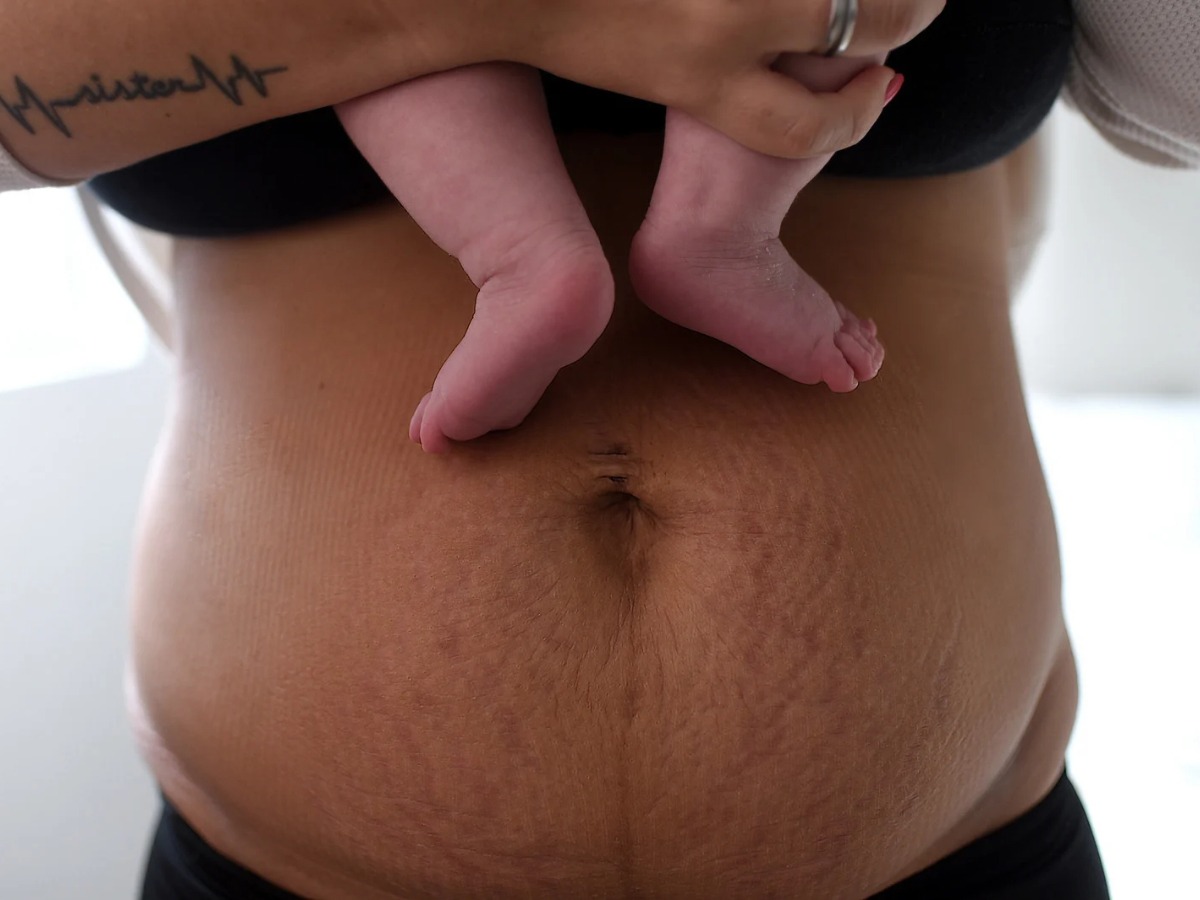
Months after having your baby, you glance down and notice something that stops you. There is a ridge, a dome, or a soft gap running down the center of your belly, and it may be most obvious when you sit up or strain. If this sounds familiar, you are very likely looking at diastasis recti, one of the most common and least talked about parts of postpartum recovery.
At At Last Chiropractic in Lithia, FL, we care for new mothers throughout FishHawk, Riverview, Brandon, and Valrico, and this question comes up often. Here is a clear look at what diastasis recti is, what actually helps it heal, and where gentle chiropractic care fits into the bigger picture.
What Is Diastasis Recti?
Your abdomen has a pair of muscles that run vertically down the front, the rectus abdominis, often called the six-pack muscles. Down the middle, a band of connective tissue called the linea alba joins the left and right sides together.
During pregnancy, as your uterus grows, that connective tissue stretches and the two muscle bellies gradually move apart to make room for your baby. This is normal and necessary. Diastasis recti is the term for when that separation remains wider than usual after birth, leaving a gap down the midline and a core that does not yet work as a connected unit.
How to Spot It
Diastasis recti often shows up as a visible gap, ridge, or doming along the center of the abdomen, most noticeable when you lift your head while lying down or rise from a chair. Many moms also describe a feeling of weakness through the middle, a tummy that still looks pregnant months later, or a sense that their core simply is not supporting them the way it used to.
You can get a rough sense of it at home. Lying on your back with your knees bent, place your fingers just above or below your belly button and gently lift your head. If you feel a gap of roughly two finger widths or more, or a soft valley where firm muscle should be, diastasis recti may be present. This is a clue to have it properly assessed, not a diagnosis on its own.
Why It Happens, and Who Gets It
Diastasis recti is extremely common. Some degree of separation happens in nearly all pregnancies by the third trimester, and for many women it narrows on its own in the early months after birth. For others, it lingers.
Several things can make it more likely or slower to resolve, including carrying a large baby or multiples, more than one pregnancy, and the natural effects of pregnancy hormones on connective tissue. It is not a personal failing and it is not caused by anything you did wrong. It is simply how some bodies respond to the remarkable work of growing a baby.
What Actually Helps It Heal
Here is the most important part. The foundation of recovering from diastasis recti is specific, progressive core and breathing work, ideally guided by a professional who assesses your abdomen directly. A pelvic floor physical therapist or a provider trained in postpartum core rehabilitation is the right person to lead this. They can confirm the separation, check your pelvic floor, and give you a safe, staged plan.
Gentle, coordinated movement that reconnects the deep core and breath tends to help, while certain intense abdominal exercises, like traditional crunches and full sit-ups, can make doming worse if they are done too soon. Good body mechanics also matter, such as rolling to your side to get up rather than straining straight forward. Your rehab provider will guide the specifics for your stage of recovery.
Where Gentle Chiropractic Care Fits In
It is important to be clear and honest here. Chiropractic care does not close the gap of diastasis recti, and it is not a replacement for the core rehabilitation that a pelvic floor therapist or physician provides. That work is the heart of recovery.
What gentle chiropractic care can offer is complementary support for the rest of your body as you rehab. When your core is still regaining its strength, your spine and pelvis often carry extra load, which can leave your back, hips, and posture feeling the strain. Our care focuses on supporting healthy alignment and movement and easing that surrounding tension, so your body is more comfortable and better supported while the core work does its job. We are always glad to work alongside your physician and pelvic floor therapist as one part of your team.
Be Patient and Kind With Yourself
Core recovery takes time, often many months, and progress is rarely a straight line. It helps to have your abdomen assessed, to follow a plan built for your body, and to resist comparing your timeline to anyone else’s. With the right support, most women make meaningful progress in how their core looks, feels, and functions.
You grew and delivered a baby. Giving your body thoughtful, patient care during recovery is exactly what it deserves.
If you are navigating core recovery after baby and would like gentle support alongside the rest of your care team, we would love to help. Dr. Anthony Taylor, Dr. Carissa Taylor, and Dr. Paul Polarczyk provide gentle, neurologically based care and are glad to work alongside your physician and pelvic floor therapist. Book your appointment today at At Last Chiropractic in Lithia, FL, or ask about our new patient special offer to get started.